



Cutting a cigar correctly is one of the first skills to learn before lighting it. A clean cut opens the cap without damaging the wrapper, helping create a consistent draw while keeping the cigar intact.
The process is simple, but where and how you cut matters. Removing too much of the cap can cause the wrapper to unravel, while a poor-quality or dull cutter can crush the head instead of making a clean cut.
This step-by-step guide explains how to cut a cigar properly, which part to cut, how much to remove, and how to choose between the most common cutting methods.
Which Part of a Cigar Should You Cut?
Before making the cut, it helps to understand the basic parts of a cigar.
A cigar has two main ends:
- The head: The end you place in your mouth. This is the end that needs to be cut.
- The foot: The open end that is lit. It does not need to be cut.
The head is usually sealed with a small piece of tobacco called the cap. The cap helps keep the wrapper from unraveling and protects the construction of the cigar.
Your goal is to remove only enough of the cap to create an open passage for the draw.
Step 1: Choose the Right Cigar Cutter
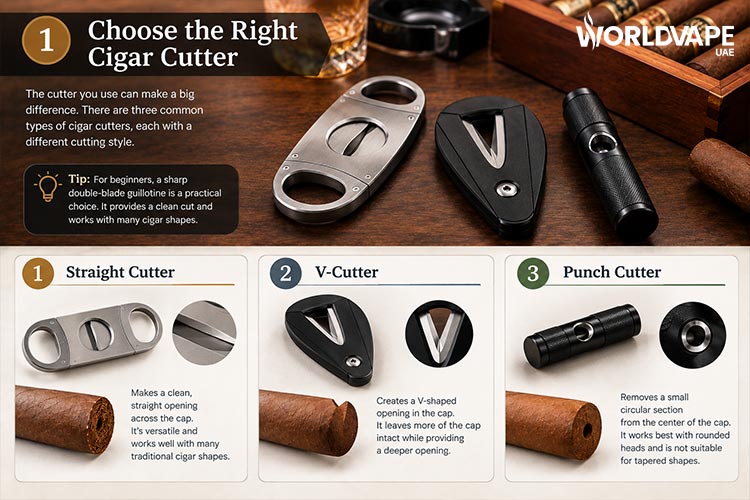
The cutter you use can make a significant difference. The most common options are:
- Straight cutter: Makes a clean, straight opening across the cap.
- V-cutter: Creates a V-shaped opening in the cap.
- Punch cutter: Removes a small circular section from the center of the cap.
For someone learning how to cut a cigar, a sharp double-blade guillotine is a practical starting point. It provides a clean cut and works with many traditional cigar shapes.
Whatever style you choose, make sure the blades are sharp. A dull cutter can crush or tear the wrapper instead of cutting through it cleanly.
Step 2: Identify the Cap
Hold the cigar under good lighting and look closely at the head.
You should be able to see where the cap meets the rest of the wrapper. This area is important because cutting too far down can damage the wrapper and cause it to loosen during smoking.
For a traditional rounded cigar, the cap is usually easy to identify. Cigar shapes with tapered heads, such as torpedoes, require more care because the cutting point is different.

Step 3: Position the Cutter
Place the head of the cigar into the cutter without immediately making the cut.
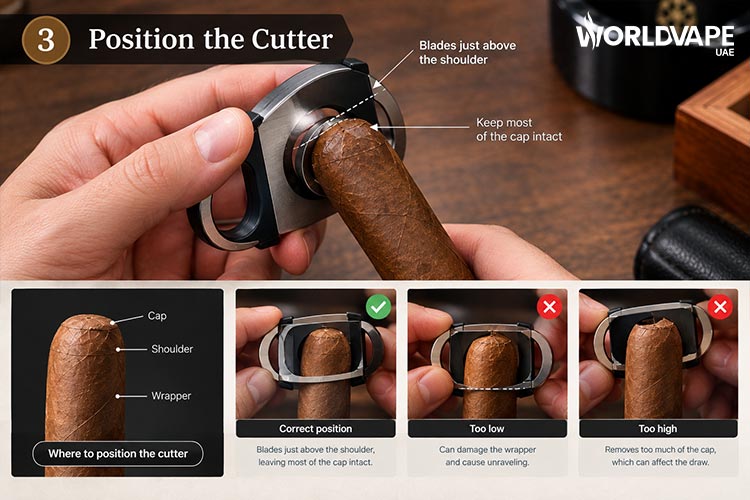
The blades should sit just above the shoulder of the cigar, leaving most of the cap intact. The exact position depends on the shape of the cigar, but the general rule is simple:
Remove the smallest amount necessary to open the cap.
You do not need to cut deeply into the cigar to create a good draw.
Step 4: Make One Clean Cut
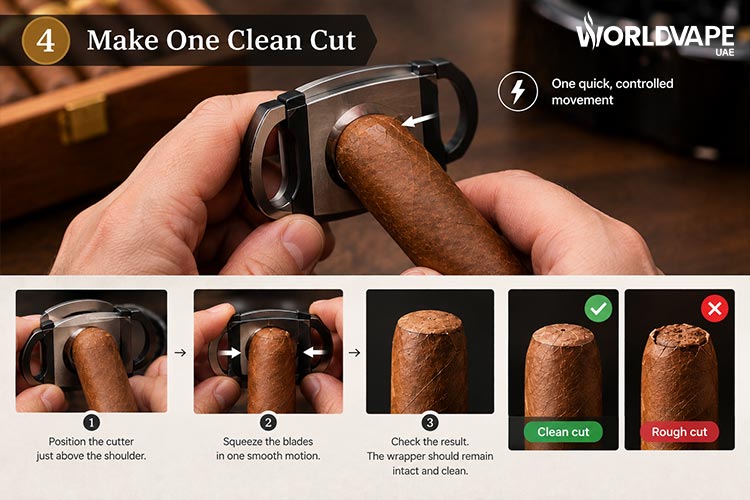
Once the cutter is positioned correctly, make the cut in one quick and controlled movement.
Avoid slowly squeezing the blades through the cigar. A hesitant cut can crush the cap or create an uneven edge.
A sharp cutter should pass through the cap smoothly.
After cutting, inspect the head. The wrapper should remain intact, with no large cracks or loose tobacco.
Step 5: Check the Draw
Before lighting the cigar, take a gentle, unlit draw.
The goal is to check whether air can move comfortably through the cigar. If the draw feels excessively tight, the opening may be too small.
However, avoid repeatedly cutting the cigar simply because the draw does not feel perfect. The construction and density of the tobacco also influence airflow.
If a very small adjustment is necessary, make it carefully rather than removing a large section of the cap.

Straight Cut vs. V-Cut vs. Punch Cut
There is no single cutting method that works best for every cigar. Each option creates a different opening.
Straight Cut
A straight cut removes part of the cap across the top of the cigar. It is versatile and works well with many traditional cigar shapes.
For beginners, it is often the easiest method to learn because the cutting motion is straightforward.
V-Cut
A V-cutter removes a wedge from the cap rather than slicing straight across it.
This leaves more of the cap intact while creating a deeper opening. It can be useful for smokers who prefer a different draw compared with a traditional straight cut.
The shape and ring gauge of the cigar should still be considered before using a V-cutter.
Punch Cut
A punch cutter creates a small circular opening in the center of the cap.
It leaves more of the original cap intact than a straight cut, but it is mainly suited to cigars with a rounded head. It is generally not suitable for tapered shapes such as torpedoes.
How Much of the Cigar Should You Cut?
One of the most common mistakes is cutting too much.
You generally only need to remove the thin portion of the cap necessary to create an opening. Cutting beyond the cap can expose the wrapper and increase the chance of unraveling.
A useful rule is:
Start with a minimal cut. You can always make the opening slightly larger, but you cannot put the removed tobacco back.
Common Cigar-Cutting Mistakes to Avoid
Even a simple cutting technique can go wrong if you rush the process.
Cutting Too Far
Removing too much of the head can damage the wrapper and affect the cigar’s construction.
Using a Dull Cutter
A dull blade may crush the cigar rather than producing a clean cut.
Cutting Slowly
A slow, hesitant movement can create a rough or uneven edge.
Cutting the Wrong End
The head is the end that needs to be opened. The foot is already open and is intended for lighting.
Ignoring the Cigar’s Shape
Not every cigar should be treated in exactly the same way. Traditional round-headed cigars, figurados and torpedoes can require different approaches.
Does the Type of Cigar Affect the Cut?
Yes. The shape and construction of the cigar should influence your approach.
A traditional parejo with a rounded head is generally straightforward to cut with a straight or punch cutter. A torpedo or another tapered cigar requires more attention because removing too much from the pointed head can change the way the cigar draws.
The same principle applies when choosing cigars in different markets. If you’re browsing Cigars dubai, pay attention to the cigar’s shape and ring gauge rather than choosing a cutter based only on appearance.
For example, someone exploring a cuban cigar may encounter different shapes and sizes, so the cutting technique should be adjusted to the construction of the individual cigar rather than the country associated with it.
What to Do After Cutting a Cigar
Once the cigar has been cut and the draw feels comfortable, it is ready for the next stage: lighting.
Keep the cut clean and avoid repeatedly touching or squeezing the head. Excessive handling can damage the wrapper and affect the construction.
If you are also interested in protecting cigar quality between smoking sessions, our guide on How to Store Cuban Cigars Properly? explains the basic principles of keeping cigars in suitable storage conditions.

Quick Guide: How to Cut a Cigar
If you want the process in a few simple steps:
- Identify the head and foot of the cigar.
- Find the cap at the head.
- Choose a suitable sharp cutter.
- Position the blades just above the shoulder.
- Remove only a small portion of the cap.
- Make one clean, controlled cut.
- Check the draw before lighting.
- Make a small adjustment only if necessary.
The key is not to remove as much tobacco as possible. A good cut is controlled, clean and appropriate for the cigar’s shape.
Frequently Asked Questions
How do you cut a cigar correctly?
Identify the capped head of the cigar and use a sharp cutter to remove only a small portion of the cap. Make one clean cut without cutting too far into the wrapper. Then check the draw before lighting.
What is the best way to cut cigars?
For many traditional cigars, a sharp straight cutter is a simple and versatile option. However, V-cutters and punch cutters can also work well depending on the cigar’s shape, size and personal preference.
How to properly cut the end of a cigar?
Cut the head, not the foot. Remove only enough of the cap to create an open draw while keeping the wrapper intact. Avoid cutting below the shoulder of the cigar.
Do I cut both ends of a cigar?
No. The head is the end that is normally cut because it is sealed with a cap. The foot is already open and is the end intended for lighting.
Can you use a punch cutter on every cigar?
No. Punch cutters work best with cigars that have a rounded head. They are generally not suitable for tapered shapes because there may not be enough surface area for the punch to create a proper opening.
Why does my cigar unravel after cutting?
The cigar may unravel if too much of the cap was removed or if the wrapper was damaged during cutting. A dull cutter can also tear the wrapper instead of making a clean cut.
Final Thoughts
Learning how to cut a cigar properly does not require a complicated technique. The most important points are choosing a sharp cutter, identifying the cap, removing only what is necessary and making one clean cut.
Once you understand how different cutters and cigar shapes work, you can choose the method that best suits the cigar in front of you. For educational resources and cigar-related information, World Vape UAE can also be a useful starting point for exploring different cigar products and formats.


