



Enjoying a cigar properly is about more than lighting it. The experience begins with choosing a cigar that matches your taste and available time, checking its freshness, preparing it with a clean cut, and lighting it evenly. From there, a relaxed pace, attention to flavor, and a comfortable setting can make the experience more enjoyable and consistent.
Whether you are new to cigars or already familiar with different blends, understanding a few practical techniques can help you appreciate the aroma, flavor, and construction of a cigar without making the process unnecessarily complicated.
This guide explains how to choose, prepare, light, and enjoy a cigar, with practical examples and answers to common beginner questions.
1. Choose a Cigar That Matches Your Preferences
The first step toward enjoying a cigar is choosing one that suits your personal taste, experience, and available time. Cigars differ in strength, size, shape, tobacco blend, and flavor profile, so there is no single option that suits everyone.
Understand cigar strength and flavor
Cigar strength and flavor are related, but they are not the same thing. Strength generally refers to the intensity of the tobacco’s effects, while flavor describes the aromas and tastes you notice.
Common flavor descriptions include:
- Creamy and smooth: Often associated with soft, rounded flavor impressions.
- Woody and earthy: Notes reminiscent of cedar, soil, or dry leaves.
- Spicy: Peppery or warming sensations on the palate.
- Sweet and nutty: Impressions such as cocoa, roasted nuts, or natural sweetness.
- Rich and robust: More pronounced, layered flavor characteristics.
These descriptions are subjective. Two people can smoke the same cigar and notice different flavors.
Consider cigar size and smoking time
Cigar size affects how long it may take to finish, as well as how the cigar feels and develops during use. The actual duration depends on the cigar’s construction, tobacco, and pace.
| Cigar format | General characteristics |
|---|---|
| Petit Corona | Compact format for a shorter session |
| Robusto | Shorter, relatively thick format |
| Toro | Longer format that allows an extended session |
| Churchill | Long format generally associated with a longer session |
| Cigarillo | Small format, often designed for a shorter experience |
Practical example: Imagine you have a quiet 30-minute break. A compact cigar may fit your available time more comfortably than a long Churchill. If you have more time, you can compare larger formats and see how their flavor develops.
The important point is to choose a format that fits your schedule rather than rushing through one that takes longer than expected.
Keep track of the cigars you try
Taste preferences become easier to recognize when you record your experiences.
After trying a cigar, note:
- Its name, brand, and size.
- The country of origin, if known.
- The flavor descriptions you noticed.
- Whether the draw and burn were consistent.
- How long the session lasted.
- Which characteristics you would look for again.
For example, if you repeatedly enjoy woody, nutty flavors and a compact format, those observations can help you narrow down future comparisons.
2. Check Whether Your Cigar Is Fresh
A cigar’s condition can influence its aroma, texture, draw, and burn. Before preparing it, take a moment to inspect its appearance and feel.
A well-maintained cigar should generally feel slightly pliable rather than brittle or excessively soft. Its wrapper should not have obvious damage, and it should not show signs of unwanted moisture or mold.
What to check before lighting
Wrapper: Look for significant cracks, peeling, or unusual discoloration.
Texture: Gently handle the cigar. Excessive dryness may make the wrapper fragile, while excessive moisture can affect its construction and burn.
Aroma: A cigar typically has a recognizable tobacco aroma. An unusual musty or mold-like smell deserves attention.
Storage history: If you know how the cigar was stored, that information can help you assess its condition.
Practical example: Suppose you take a cigar out of a humidor and notice that the wrapper feels unusually brittle and begins flaking when handled. Rather than immediately lighting it, inspect its condition and consider whether it has been stored too dry.
For a more detailed explanation of freshness indicators and storage-related changes, read our guide: How to Tell If a Cigar Is Fresh?
3. Cut Your Cigar Properly
A clean cut helps create an even opening for airflow while preserving the cigar’s structure. Cutting too deeply or unevenly can damage the wrapper and affect the draw.
Most cigars have a closed end, called the cap, which is the part you prepare before use.
Which cigar cutter should you use?
There are several common cutting tools:
- Straight cutter: Makes a straight cut across the cap.
- V-cutter: Creates a V-shaped opening.
- Punch cutter: Makes a small circular opening in the cap.
Each tool creates a different opening, and personal preference plays a role in choosing between them.
How to make a clean cut
- Identify the cap at the closed end of the cigar.
- Position the cutter carefully, avoiding an unnecessarily deep cut.
- Make a quick, controlled cut.
- Inspect the opening and check that the wrapper remains intact.
Practical example: If you cut too far into the cap of a cigar, the wrapper may begin to unravel. A more controlled cut near the cap’s edge helps preserve the cigar’s construction.
For step-by-step instructions and a comparison of cutting methods, see our related guide: How to Cut a Cigar Properly?

4. Light the Cigar Evenly
An even light helps the cigar burn more consistently. Uneven lighting can leave one side burning faster than the other, which may lead to an irregular burn line.
The goal is to prepare the foot—the open end of the cigar—without scorching it unnecessarily.
The basic lighting process
- Hold the cigar comfortably and keep it at a controlled distance from the flame.
- Gently warm the foot while rotating the cigar.
- Allow the edge to begin glowing evenly.
- Check the circumference for areas that have not caught.
- Avoid directing excessive heat at one spot.
A butane lighter, suitable wooden matches, or another cigar-appropriate lighting tool can be used. The important consideration is controlled, even heating.
Why an uneven light matters
If one section of the foot is glowing while another remains dark, the cigar may begin burning unevenly.
Practical example: You light a cigar and notice that the left side is glowing while the right side remains unlit. Instead of continuing as if the entire foot were ready, check the unlit section and allow it to catch evenly.
This small adjustment can help reduce the need for repeated corrections later.
5. Find a Comfortable Pace
Pacing is one of the most noticeable differences between a rushed cigar session and a more relaxed one.
Cigars are generally enjoyed through occasional draws rather than continuous, rapid puffing. Taking frequent draws can cause the cigar to heat up, which may change the flavor and make the smoke feel harsher.
How to maintain a steady pace
- Leave a little time between draws.
- Avoid repeatedly puffing just to keep the cigar burning.
- Pay attention to changes in temperature and flavor.
- Let the cigar rest briefly if it becomes too hot.
- Choose a cigar length that fits the time you actually have.
There is no universal interval that works for every cigar. Construction, size, and personal preference all affect the pace.
Practical example: If you notice that a cigar is becoming noticeably hot and its flavor is turning sharper, slow down and allow it to rest. Continuing to draw rapidly may make the experience less comfortable.
A relaxed pace also gives you more time to notice the cigar’s aroma and changing flavor profile.
6. Pay Attention to Flavor and Aroma
One way to make a cigar session more engaging is to pay attention to what changes as the cigar burns.
Some cigars have relatively consistent flavors, while others develop different characteristics as you move through the session.
What to notice
Aroma: What do you notice in the surrounding scent? Is it woody, earthy, sweet, or spicy?
Flavor: Which characteristics stand out on the palate?
Texture: Does the smoke feel light, dense, smooth, or dry?
Development: Do the flavor and aroma remain similar, or do they change over time?
Finish: What impression remains after a draw?
Flavor descriptions are personal observations rather than fixed measurements. You do not need to identify complicated tasting notes to appreciate the differences between cigars.
Try a simple tasting exercise
The next time you compare two cigars, use the same four questions for each:
- What is the first aroma I notice?
- Which flavor is most recognizable?
- Does the flavor change as the cigar progresses?
- Which characteristics do I prefer?
For example, one cigar may remind you of cedar and roasted nuts, while another has more noticeable peppery or earthy notes. Recording these differences can help you understand your own preferences.
7. Choose a Comfortable Setting
Your surroundings can influence how you experience a cigar’s aroma and flavor.
A comfortable outdoor seating area, a designated smoking space, or a suitable cigar lounge can provide a setting where you have enough time to relax without rushing.
Consider these practical details
- Choose a location where smoking is permitted.
- Consider ventilation and the comfort of people nearby.
- Have an appropriate ashtray available.
- Avoid placing the cigar on surfaces where it could roll or fall.
- Make sure you have enough time for the format you selected.
A calm setting can also make it easier to focus on the cigar’s aroma and construction.
Practical example: If you are meeting a friend at a cigar lounge, selecting a format that fits the length of your visit can help you avoid feeling rushed toward the end.
8. Handle Ash and Burn Consistently
Cigar ash can sometimes remain attached for a considerable length of time, but waiting too long can result in ash falling unexpectedly.
There is no need to force the ash to remain attached or to remove it after every draw.
A simple approach to managing ash
- Keep an ashtray within easy reach.
- Check the length and stability of the ash periodically.
- Allow it to fall gently into the ashtray when appropriate.
- Avoid striking the cigar aggressively against the ashtray.
Excessive force can damage the wrapper or disturb the burning end.
What if the cigar starts burning unevenly?
An uneven burn does not always mean the cigar is defective. It can be affected by lighting, construction, airflow, and environmental conditions.
If one side burns faster, check whether the other side is still burning. Allowing the cigar to rest and observing the burn can help you decide whether a correction is needed.
Avoid repeatedly applying intense heat to the same area, as this may make the burn less consistent.
9. Know When to Finish
A cigar does not need to be smoked down to its smallest possible remnant to count as a complete session.
As a cigar gets shorter, the smoke can become warmer and its flavor may change. Personal preference determines when the experience is finished.
How to finish a cigar neatly
- Stop when the flavor or temperature is no longer comfortable for you.
- Place the cigar gently in an appropriate ashtray.
- Allow it to go out naturally rather than crushing it forcefully.
- Make sure it is fully extinguished before leaving it unattended.
Crushing a cigar can create a stronger lingering odor and leave tobacco residue in the ashtray.
A natural finish is a simple way to keep the end of the session tidy.
10. Store Unused Cigars Correctly
If you are keeping cigars for later, storage conditions matter. Tobacco can change when exposed to unsuitable humidity or temperature, and those changes may affect its texture and burn.
A humidor is commonly used to help maintain a stable environment for cigars.
Basic storage considerations
- Keep cigars away from direct sunlight and excessive heat.
- Avoid sudden changes in humidity.
- Use an appropriate storage container.
- Check cigars periodically for unusual odors, visible mold, or changes in texture.
- Keep different products separated when their aromas could transfer.
A cigar that has become excessively dry or damp may not perform as expected, so checking its condition before use is worthwhile.
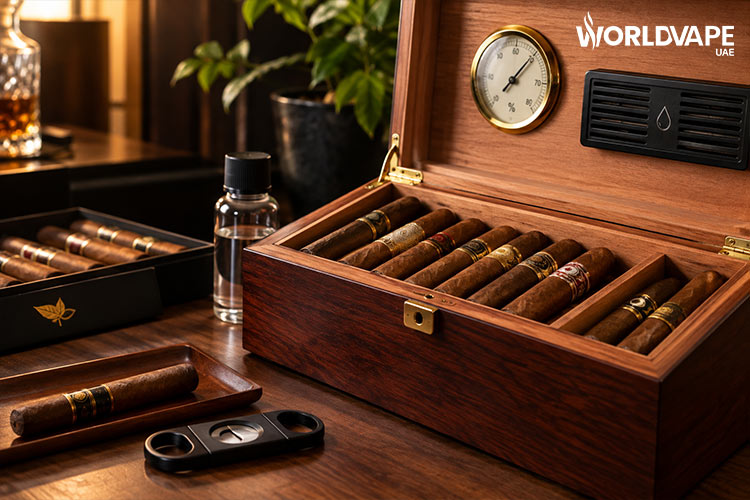
11. How to Choose a Cigar Shop in Dubai
If you are comparing cigar retailers, look beyond the product name alone. Product condition, clear descriptions, storage practices, and reliable information can all help you make an informed comparison.
When researching a cigar shop Dubai, consider the following:
- Does the retailer provide clear product details?
- Is the cigar’s origin and brand identified accurately?
- Can you find information about storage and freshness?
- Are the product’s size and format clearly stated?
- Are local purchasing and smoking regulations observed?
If you are comparing Cuban cigars, verify the product’s origin and authenticity through reliable documentation rather than relying only on packaging or marketing language.
People researching where to buy Cuban cigar products should also check the applicable local rules and import requirements before making a purchase.
12. Understanding Cigarillos and Their Price
Cigarillos are smaller cigar formats, but their size, tobacco composition, packaging, and intended use can vary between products.
When comparing Cigarillo price, consider more than the listed cost:
- Number of units in the package.
- Brand and product format.
- Tobacco composition.
- Packaging and product condition.
- Retailer and applicable taxes.
For example, a package containing several cigarillos may have a different unit price from a single cigarillo. Comparing the cost per unit can make the difference easier to understand.
Product names alone do not guarantee that two cigarillos have the same size, composition, or characteristics, so check the individual product details.
13. How Cigars Differ From Cigarettes
Cigars and cigarettes are both tobacco products, but they differ in construction, format, and the way their products are commonly presented.
Cigars generally use tobacco wrapped in tobacco leaf or a tobacco-based wrapper, while cigarettes typically use a paper wrapper around processed tobacco.
Some people researching tobacco products may also come across Captain Black cigarettes. It is important to check the exact product category and description because similarly named tobacco products can differ in format and composition.
The same principle applies when comparing cigars, cigarillos, and cigarettes: product names and brand familiarity are not substitutes for checking the actual specifications.
14. Common Mistakes That Can Affect a Cigar Session
A few avoidable mistakes can make a cigar session less consistent.
| Common mistake | What to do instead |
|---|---|
| Choosing a cigar that takes longer than your available time | Match the format to your schedule |
| Cutting too deeply | Make a controlled cut near the cap |
| Lighting only one side | Rotate the cigar and check the full foot |
| Taking rapid, repeated draws | Allow time between draws |
| Ignoring changes in temperature | Slow down or finish when the smoke becomes uncomfortable |
| Striking ash off aggressively | Let it fall gently into an ashtray |
| Storing cigars without checking conditions | Maintain suitable storage and inspect them periodically |
The key is to pay attention to the cigar’s condition and how it behaves rather than trying to follow a rigid set of rules for every product.
Final Thoughts
Learning how to enjoy a cigar properly comes down to understanding the product, preparing it carefully, and paying attention to the experience.
Choose a format that fits your available time, check its freshness, make a clean cut, and ensure the foot is lit evenly. A relaxed pace and a comfortable setting can make it easier to notice differences in aroma, flavor, and construction.
Keeping simple notes about the cigars you encounter can also help you recognize which characteristics you prefer and make future comparisons more meaningful.
For more tobacco-related product information and guides, explore World Vape UAE and its available content.
Frequently Asked Questions
How do you enjoy a cigar properly?
Start by choosing a cigar that matches your preferences and available time. Check its condition, cut the cap cleanly, light the foot evenly, and maintain a relaxed pace. Pay attention to aroma, flavor, and temperature, and finish when the experience is no longer comfortable.
Should you inhale cigar smoke?
Cigar smoking is commonly approached by drawing smoke into the mouth to experience its flavor rather than inhaling it into the lungs. Individual practices vary, but inhaling tobacco smoke can expose the lungs to harmful substances.
How often should you puff on a cigar?
There is no single interval that suits every cigar. A slower, occasional pace is generally used to avoid overheating the tobacco. The cigar’s size, construction, and how it burns can influence the pace.
Why does my cigar keep going out?
A cigar may go out because it is not burning evenly, because draws are too infrequent to maintain combustion, or because of factors related to its construction and condition. Check the burn and the cigar’s storage condition rather than repeatedly applying excessive heat.


